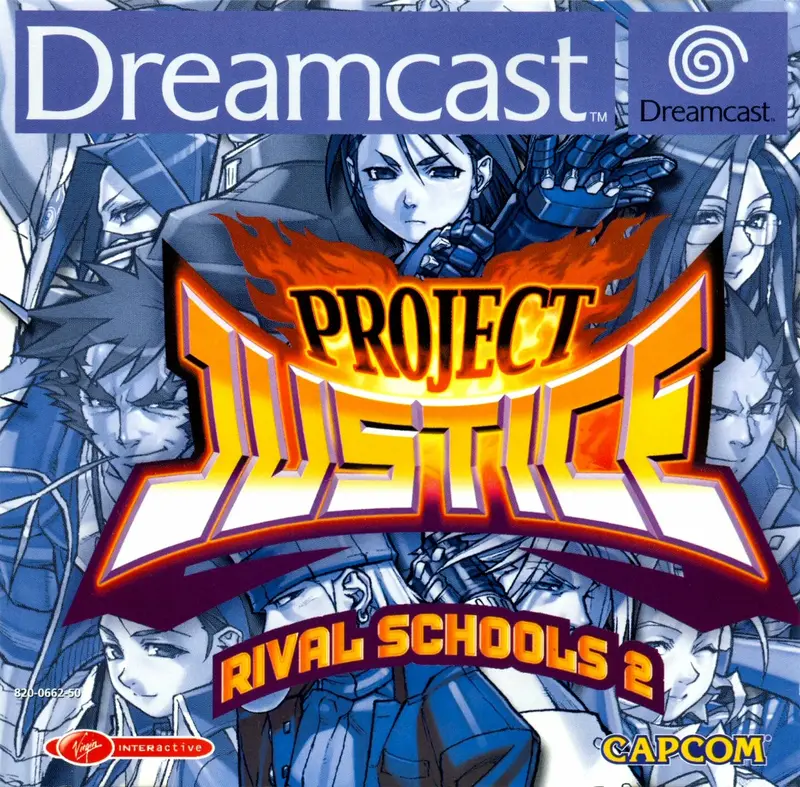
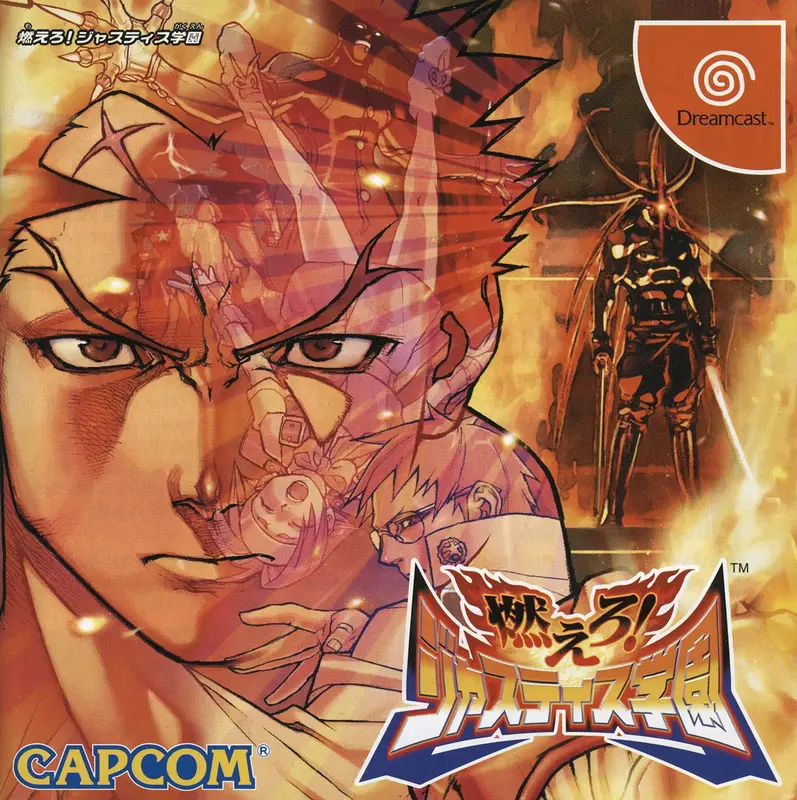
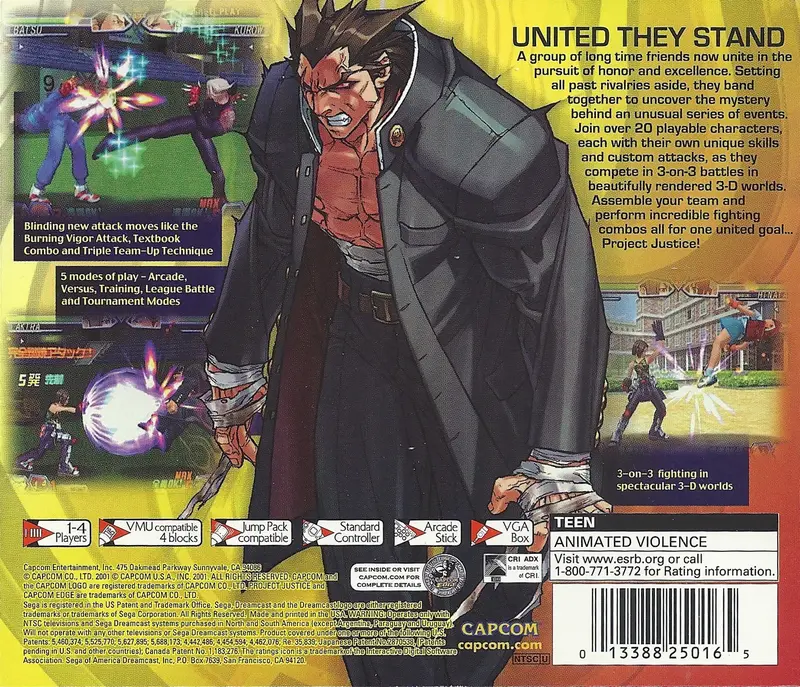
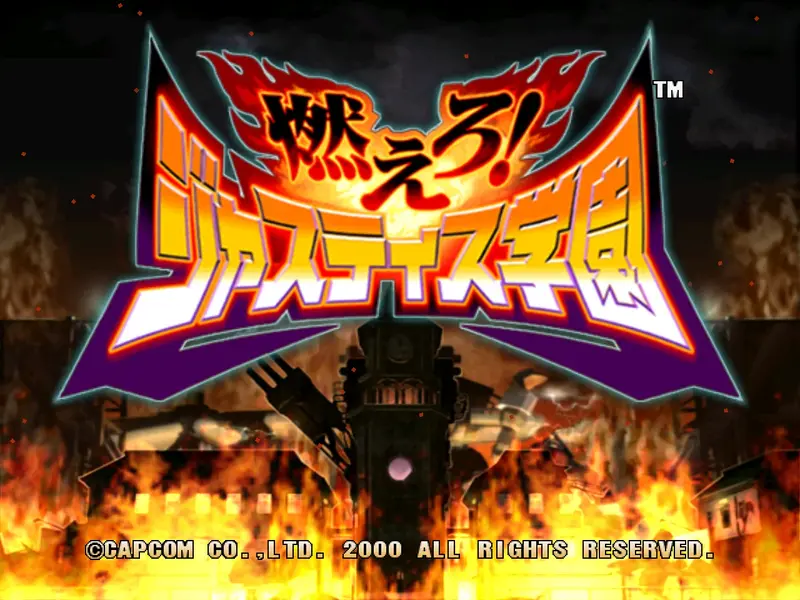
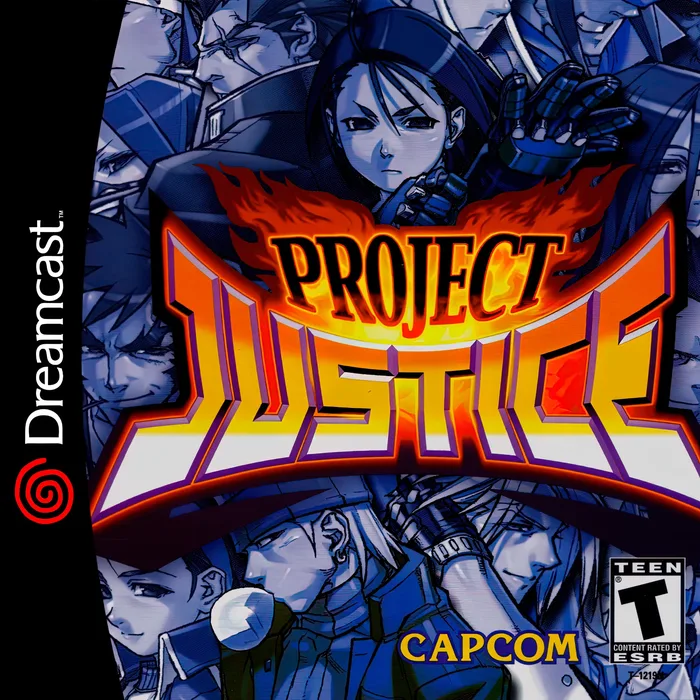
Cover: LaunchBox Games DB
Video
Video: Project Justice - DreamON Preview Trailer · Dreamcaster DCF
Project Justice
Dreamcast · 2000 · Capcom (JP/NA); Virgin Interactive Entertainment (PAL)
RateSpecs
- Developer
- Capcom
- Publisher
- Capcom (JP/NA); Virgin Interactive Entertainment (PAL)
- First release
- 2000
- Platform
- Dreamcast
- Rarity
- Common · rating
Why
. Estimate: exact units produced unknown.
Description
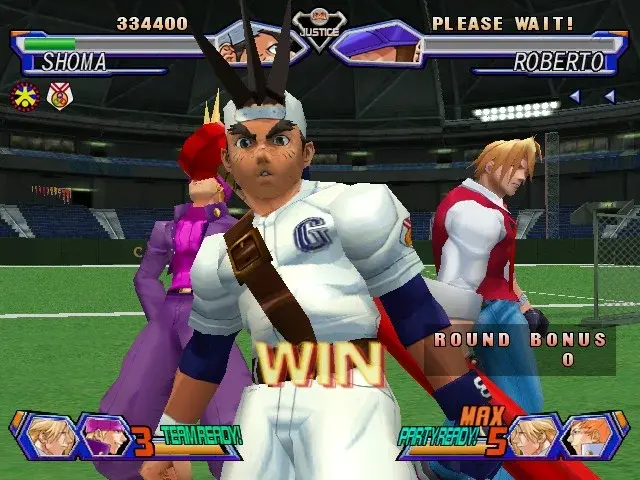
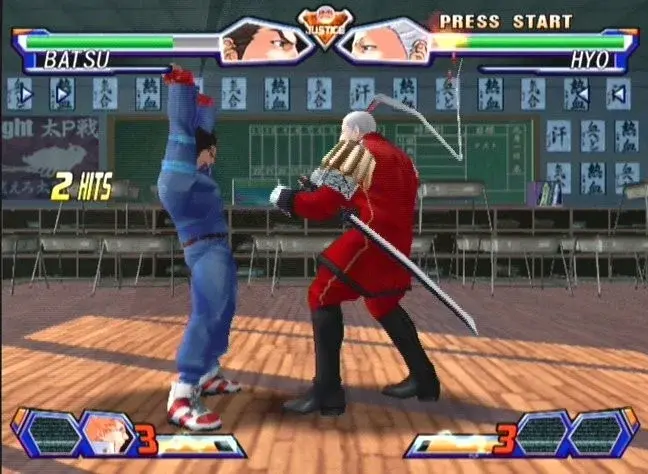
Project Justice is the sequel to Rival Schools: United By Fate. Project Justice's fighting system is lifted from the original Rival Schools, with some notable changes. The game continues to be a team fighter, but has teams of three characters instead of two.
Read more
. This allows another Team-Up attack to be used in a fight, but also adds a new type of attack, the Party-Up, initiated by pressing any three attack buttons. The Party-Up is a three-person attack that varies based on what school the character initiating the attack is from. The additional partner also allows players to cancel an opponent's Team-Up Special by inputting a Team-Up command of their own. This initiates a short fighting sequence between one character from each team. If the person initiating the sequence gets the first successful hit in during the sequence before time runs out, the Team-Up they are caught in will be canceled, and the game switches back to the main fight; if the opposing player gets the first hit or time runs out, the Team-Up continues as usual. Additionally, the 'vigor' meter in Project Justice is limited to 5 levels (down from 9 in Rival Schools), with Party-Ups requiring all 5 levels, Team-Ups continuing to cost two levels, and any attempts (successful or not) to cancel a Team-Up costing one level. Also carrying over from the first game, the Dreamcast port of Project Justice in Japan includes a character creation mode that allows a player to create their own fighters who can be used in all modes except for single-player. However, the character creation in Project Justice is packaged as a board game, taking place during an inter-school festival, rather than a date sim game like in Rival Schools. As with School Life Mode in the original Rival Schools, though, this boardgame is not included in non-Japanese ports of Project Justice due to the amount of time it would take to translate the mode. Instead, several unlockable sub-characters were included in these ports, built from the character creation parts in the Japanese version.
Product codes
The code on the sticker shows the region and units produced.
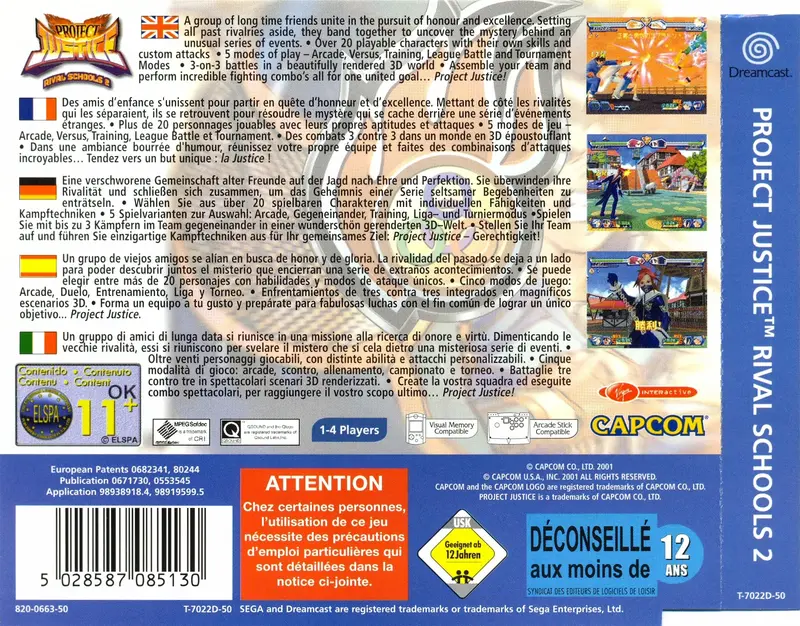
T-7022D-50EUR · on the boxCode source: retroplace.com.
Where to check prices and buy
 eBay
 Amazon
 Kleinanzeigen↗
 Vinted↗
 OLX Poland↗
 Allegro↗
 willhaben↗
 Catawiki↗
 Marktplaats↗
 OLX Ukraine↗
 Rozetka↗
 Prom.ua↗
 Hotline↗
The links open search results for Project Justice Dreamcast in shops and classified sites. We sell nothing and are not responsible for sellers: check the model and code.
Other games
Dreamcast, 2000
More from Capcom (JP/NA); Virgin Interactive Entertainment (PAL)
Reviews and ratings
No reviews yet. Leave the first one: a rating and a few words help others choosing or evaluating the find.
Write a review
Reviews are published instantly. We remove violations upon report.